
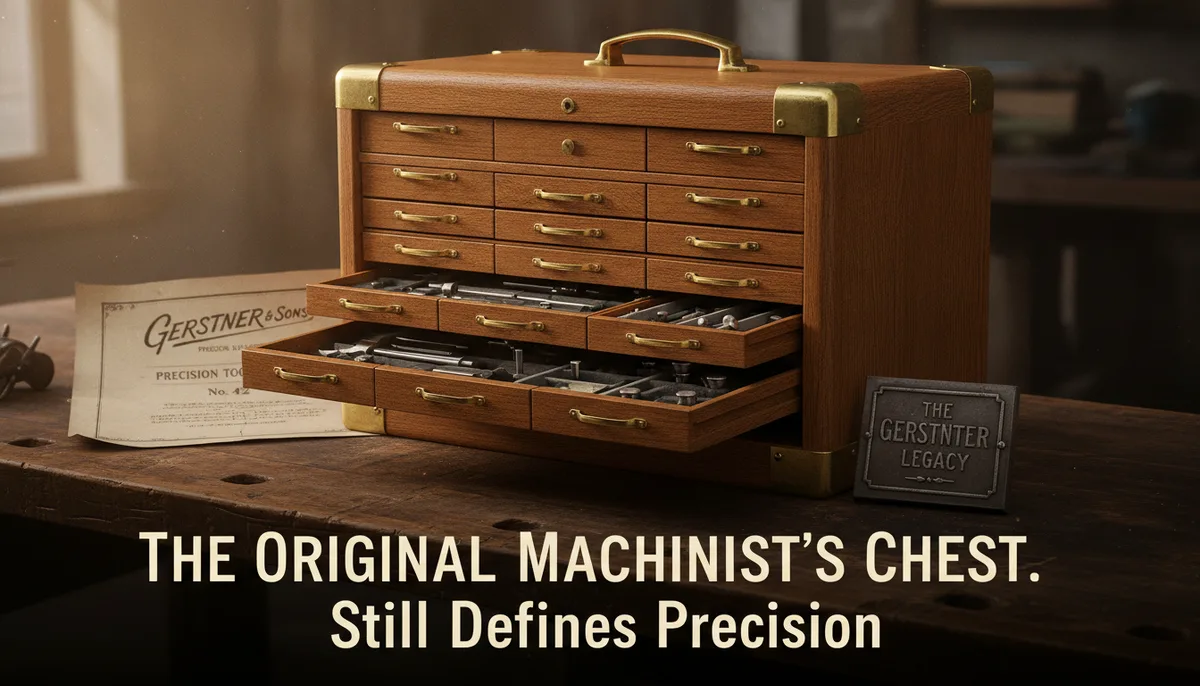
The Gerstner Legacy: Why the Original Machinist’s Chest Still Defines Precision Tool Storage
In the world of precision engineering, few things are as enduring as a well-designed tool. We often focus on the tools themselves—the calipers, the micrometers, the soldering irons—but the vessels that carry them are just as vital to the craft.
Good design is hard to beat. In the early 1900s, woodworker Harry Gerstner created what would become the modern-day machinist’s chest. For over 100 years, this design has remained the gold standard for anyone who values precision and organization. While materials and sizes have shifted to meet modern demands, the core philosophy of the Gerstner chest remains a masterclass in functional utility.
The Birth of an Icon: Harry Gerstner and the Early 1900s
The story begins in Dayton, Ohio, a hub of American innovation at the turn of the 20th century. Harry Gerstner, a skilled woodworker, noticed a gap in the market. Machinists and tool-and-die makers were the high-tech professionals of their era, working to tolerances that required absolute stability. Their tools were expensive, delicate, and prone to damage from moisture and impact.
Gerstner’s solution was a chest that combined the elegance of fine furniture with the ruggedness required for a machine shop. By using high-quality woods like oak and walnut, he created a storage system that did more than just hold tools; it preserved them. Wood, unlike the stamped metal boxes of the time, acted as a natural desiccant, absorbing ambient moisture and preventing the high-carbon steel of precision tools from rusting.
Why the Design Hasn’t Changed in a Century
It is rare for any industrial design to survive a century without a radical overhaul. Yet, if you look at a Gerstner chest from 1910 and compare it to one manufactured today, the DNA is identical. This longevity is rooted in several key design features that have proven impossible to improve upon.
The Felt-Lined Interior
One of the most recognizable features of a machinist’s chest is the green or red felt lining in every drawer. This wasn't for aesthetics; it served a dual purpose. First, it provided a non-slip surface that kept tools from rolling around and knocking into one another. Second, the felt acted as a final barrier against moisture and dust, ensuring that a micrometer remained as accurate on its thousandth use as it was on its first.
Variable Drawer Heights
Gerstner understood that a machinist’s kit is diverse. A chest needs shallow drawers for flat rules and gauges, medium drawers for calipers, and deeper compartments for bulkier items like indicators or specialized jigs. This tiered organization allows for a high density of storage without the "junk drawer" effect, where tools are piled on top of each other.
The Front Cover and Security
The classic design features a front cover that slides into a slot under the bottom drawer when the chest is in use. When the workday is over, the cover slides up and locks, securing the tools and protecting the drawer faces from the harsh environment of a shop floor.
Applying Traditional Storage to Modern Electronics
For the modern maker or electronics technician, the lessons of the Gerstner chest are incredibly relevant. Whether you are performing an Emergency RC Repair: Soldering in the Pits or working at a dedicated lab bench, the need for organized, protected precision is universal.
Modern electronics tools—such as high-end multimeters, logic analyzers, and portable oscilloscopes—are the "micrometers" of our age. They are sensitive to static, impact, and environmental degradation. While many of us have moved toward plastic hard cases for field work, the organizational hierarchy established by Gerstner still dictates how we should curate our kits.
VTG H. Gerstner Sons Dayton OHIO...
Selecting the Right Chest for Your Workflow
If you are looking to invest in a "forever" storage solution, you have more options today than ever before. You can still buy a classic wood chest that honors the original Gerstner specifications, or you can opt for modern interpretations that use heavy-duty steel or aluminum.
Wood vs. Metal
While wood is the traditional choice for its moisture-wicking properties and aesthetic appeal, metal chests offer superior durability in high-impact environments. If your work involves frequent travel or exposure to chemicals that might damage wood finishes, a high-quality metal machinist chest with felt-lined drawers is a viable alternative.
Portability and Weight
A full-sized wooden machinist chest is heavy. It was designed to sit on a workbench, not to be carried across a tarmac. For field technicians, smaller "apprentice" sized chests or specialized portable cases are more practical. When choosing a portable solution, refer to The Soldered Anywhere Master Buying Guide to ensure your storage choice aligns with the weight and dimensions of your primary toolset.
Portable Machinist Tool Box with Felt Lining
The Philosophy of "A Place for Everything"
Beyond the physical materials, the Gerstner legacy is about a mindset. A machinist's chest forces the user to be intentional. Because the drawers are specifically sized, you cannot simply throw tools into them. You must decide where each item belongs.
This level of organization is critical for complex tasks like Wireless LCD Streaming for the ANENG AN870: A Deep Dive into Multimeter Hacking. When you are deep into a hardware hack, the last thing you want to do is hunt for a specific probe or a particular gauge of solder. A chest designed with Gerstner’s principles ensures that your most-used tools are always at your fingertips, while your precision instruments remain protected in their dedicated, felt-lined homes.
Maintenance: Keeping Your Chest for a Lifetime
A high-quality tool chest is an investment that should last long enough to be passed down to the next generation. To maintain a wooden chest, periodic application of furniture wax or specialized wood oil is necessary to prevent the wood from drying out or cracking. For metal chests, ensuring the drawer slides are clean and lightly lubricated is the key to longevity.
Regardless of the material, the felt lining should be kept clean of metal shavings or solder splashes. A small vacuum or a lint roller is usually sufficient to keep the interior in pristine condition.
Conclusion: Respecting the Craft
The origins of the first mass-market tool chest remind us that good design is timeless. Harry Gerstner didn't just build a box; he built a system that respected the tools it held. As we continue to push the boundaries of what we can build and repair—whether it's vintage machinery or the latest in micro-electronics—staying grounded in these principles of organization and protection will always yield better results.
Investing in quality storage isn't just about tidiness; it's about showing respect for your craft and ensuring that your tools are always ready to perform at their peak.
Precision Tool Organization Foam Inserts
Related product: 8 Drawer Wood Tool Chest Felt Li...
Related product: Precision Defined Tool Box Foam
Related product: VTG H. Gerstner Sons Dayton OHIO...
Related product: 8 Drawer Wood Tool Chest Felt Li...
Related product: Precision Defined Tool Box Foam