
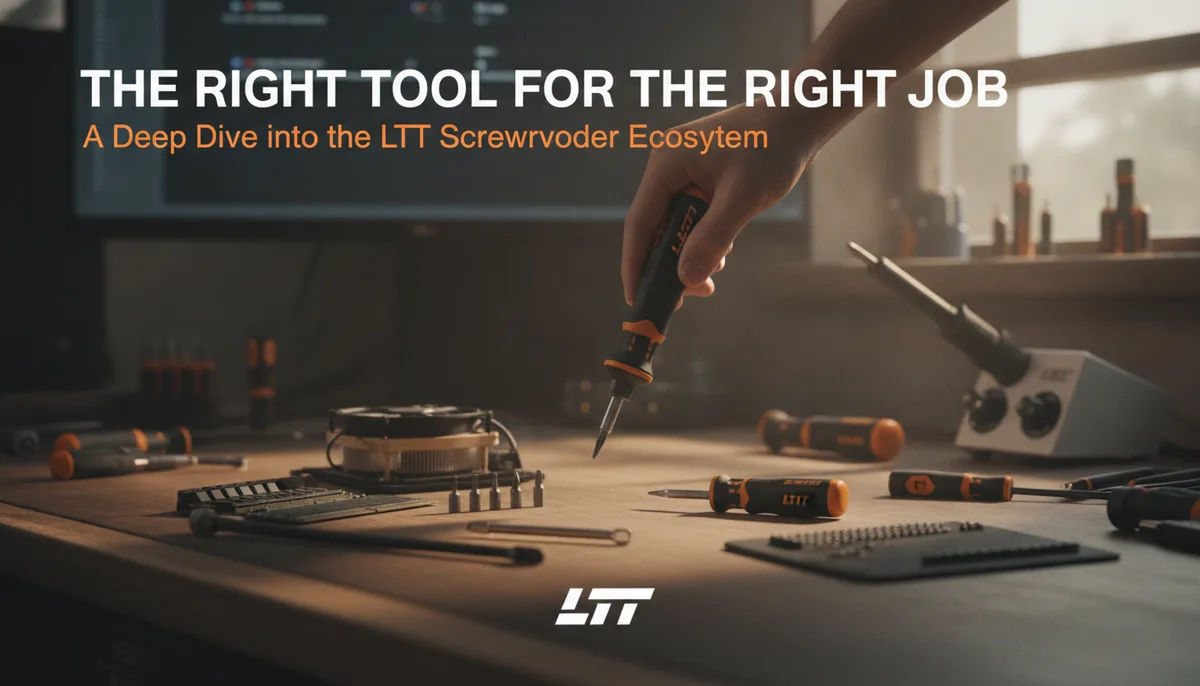
The Right Tool for the Right Job: A Deep Dive into the LTT Screwdriver Ecosystem
In the world of engineering and maintenance, there is a legendary figure whose wisdom transcends the screen: Captain Montgomery “Scotty” Scott. His mantra was simple yet profound: you should always have “the right tool for the right job.” For anyone who has ever spent an afternoon wrestling with a stripped screw or a poorly fitted driver, these words aren't just a quote; they are a survival guide. The right tool is often the only thing standing between a successful repair and a permanent trip to the scrap heap.
Les Pounder recently took a hands-on look at the LTT (Linus Tech Tips) screwdriver lineup, ranging from their flagship full-size ratcheting driver to their more recent precision offerings. The takeaway is clear: while you don’t necessarily need ultra-expensive tools to take things apart, the experience of using a tool designed with a "no-compromise" mindset changes the way you approach your workbench.
The Philosophy of the "Right Tool"
The maker movement has democratized hardware hacking, but it has also led to a market flooded with "good enough" tools. We’ve all been there—using a kitchen knife to pry a case or a generic, loose-fitting Phillips head that rounds out a screw in seconds. As we discuss in The Soldered Anywhere Master Buying Guide, the foundation of any mobile or home lab is the quality of your interface with the hardware.
The LTT screwdriver project began with a specific frustration: existing ratcheting screwdrivers were either too bulky, had sloppy mechanisms, or lacked the "fidget-friendly" ergonomics that modern tech enthusiasts crave. By focusing on the tactile response of the ratchet and the magnetic strength of the bit holder, the LTT team aimed to create a tool that felt like an extension of the hand.
Engineering the Perfect Ratchet
The heart of the LTT Full-Size Screwdriver is its ratcheting mechanism. Most consumer-grade ratcheting drivers suffer from "back-lash"—the amount of rotation required before the ratchet clicks into the next tooth. In high-precision environments, high back-lash is more than an annoyance; it makes working in tight spaces nearly impossible.
The LTT driver utilizes a high-tooth-count mechanism that provides a smooth, almost musical click. This allows for micro-adjustments and ensures that the force you apply is directed exactly where it needs to go. The direction switch is also recessed and tactile, preventing accidental flips while you're in the middle of a high-torque turn.
Bit Storage and Accessibility
One of the most praised features in Les Pounder’s review is the internal bit storage. Many "all-in-one" drivers use a hollow handle with a loose cap, leading to a rattling sound that feels cheap. The LTT driver uses a spring-loaded carousel that holds the bits firmly in place. While the bits themselves are shortened to fit this compact form factor, the driver remains compatible with standard 1/4-inch hex bits, though they won't fit in the handle storage.
The Precision Driver: For the Micro-Scale
While the full-size driver is the workhorse for PCs and household appliances, the Precision Screwdriver is where the "right tool" philosophy truly shines for the electronics enthusiast. Modern devices—smartphones, tablets, and even high-end multimeters—are held together by tiny, fragile fasteners.
If you’ve ever followed our guide on Wireless LCD Streaming for the ANENG AN870, you know that hacking modern gear requires getting inside without leaving a trace. The LTT Precision Screwdriver features a rotating end cap that is incredibly smooth, allowing you to apply constant downward pressure with your palm while rotating the barrel with your fingers.
Why Bit Tolerance Matters
In precision work, "cam-out" is the enemy. Cam-out occurs when the screwdriver bit slips out of the screw head, usually because the fit isn't tight enough. The LTT precision bits are CNC-machined to tighter tolerances than mass-produced stamped bits. This ensures a "lock-in" feel that gives you the confidence to apply torque to even the smallest Torx or Pentalobe screws without fear of stripping them.
Comparing the Ecosystem: Full-Size vs. Precision
Deciding which tool to prioritize depends heavily on your workflow.
- The Full-Size Driver: Best for PC building, mounting hardware, and general "around the house" repairs. Its strength lies in its torque and the convenience of having your most-used bits inside the handle.
- The Precision Driver: Essential for anyone working with PCBs, mobile devices, or specialized tech gear. It pairs perfectly with a high-quality portable iron, such as those mentioned in our Best Portable Soldering Irons of 2024.
Les Pounder notes that the weight distribution in both tools is centered toward the front, which helps in guiding the bit into the screw head. This ergonomic consideration reduces hand fatigue during long teardown sessions.
The "Fidget Factor" and Build Materials
It might seem trivial to discuss how a tool "feels," but for professionals and hobbyists who spend hours at a desk, ergonomics are paramount. The LTT drivers use a glass-filled nylon handle with a specific texture that provides grip without being "sticky" like some rubberized over-molds that degrade over time.
The use of S2 steel for the bits ensures longevity. S2 is a shock-resistant tool steel that maintains its shape better than the cheaper Chrome Vanadium (Cr-V) found in budget sets. When you are working on a project like the Pinecil V2, having a driver that won't round off the internal housing screws is a small but vital insurance policy.
Is the "Influencer" Premium Justified?
There is often skepticism when a popular YouTube channel releases hardware. Is it just a branded version of a generic tool? In the case of the LTT screwdrivers, the answer appears to be a resounding no. The development process involved multiple iterations and custom tooling that doesn't exist in off-the-shelf products.
While you can certainly find cheaper drivers, the value lies in the refinement. You are paying for:
- Reduced Back-lash: A superior ratcheting experience.
- Magnetic Strength: A magnet that actually holds the screw on the bit, even in awkward angles.
- Durability: Materials that won't strip or shatter under normal use.
For the "Soldered Anywhere" lifestyle, where you might be repairing gear in a coffee shop, a van, or a field office, having one or two reliable tools is far better than carrying a massive case of mediocre ones.
Conclusion: Equipping Your Workbench
As Les Pounder concluded in his review, the LTT screwdrivers represent a significant investment in your hobby or profession. They embody the Scotty mantra of having the right tool for the job, ensuring that the mechanical side of your projects is as precise as the electrical side.
Whether you are building a custom mechanical keyboard, hacking a multimeter, or just tightening a loose hinge, the quality of your tools dictates the quality of your work. If you value your time and your hardware, moving away from "disposable" tools toward "heirloom" quality gear like the LTT lineup is a step every maker should eventually take.
Remember, the goal isn't just to take things apart—it's to be able to put them back together perfectly. And for that, you need the right tool.