
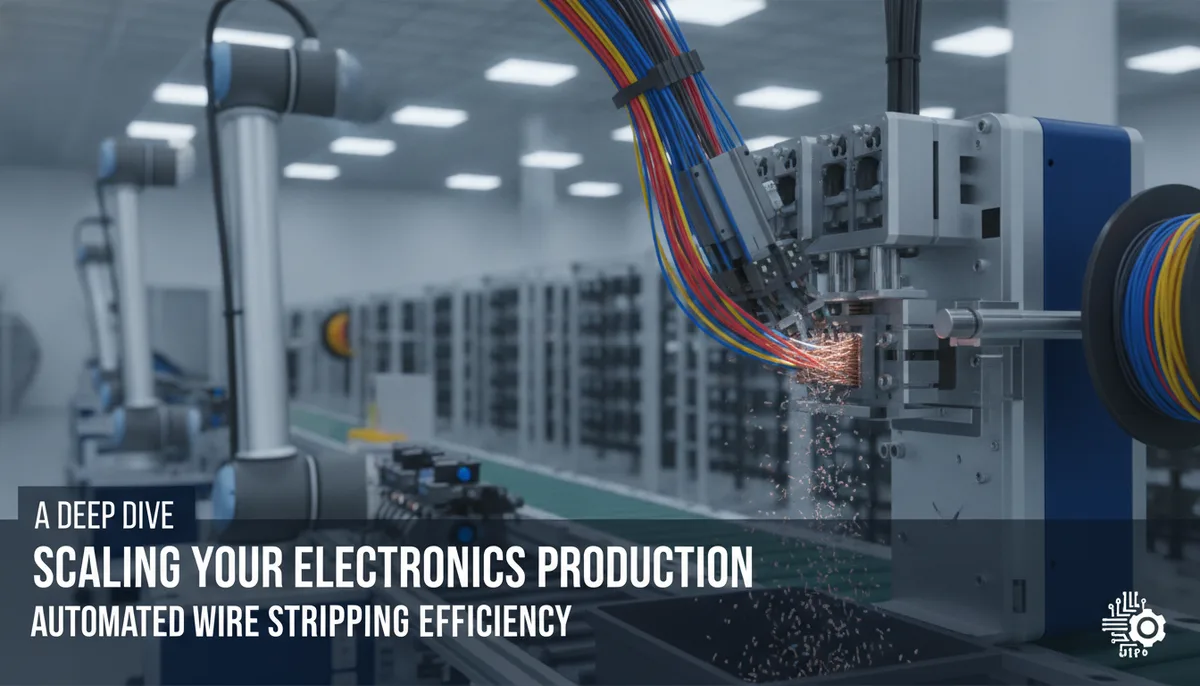
Scaling Your Electronics Production: A Deep Dive into Automated Wire Stripping Efficiency
The Bottleneck of Manual Wire Preparation
In the lifecycle of every successful electronics project, there comes a moment where prototyping ends and small-batch production begins. This transition is often where makers encounter their first major logistical hurdle: wire preparation. When you are building a one-off project, stripping five or ten wires by hand is a meditative part of the process. When you have to prepare five hundred wires to the exact same length with identical strip leads, it becomes a grueling, error-prone bottleneck.
The manual approach—using hand tools to measure, cut, and strip—introduces variability. A millimeter of difference in strip length might not matter for a breadboard, but in a tight enclosure or a professional PCB assembly, that inconsistency can lead to mechanical stress or short circuits. This is where automated solutions, like the VEVOR wire stripping machine recently highlighted by Luke Bayes of Eight Amps, become indispensable.
Automation in the workshop isn't just about saving time; it's about reclaiming your mental bandwidth for more complex tasks like firmware debugging or circuit optimization. If you are currently evaluating your toolchain for a production run, understanding the ROI of an automated stripper is the first step toward professional-grade manufacturing.
High-Efficiency Stripping: The VEVOR Advantage
The maker community recently saw a surge in discourse surrounding VEVOR tools. Known for occupying the space between "hobbyist budget" and "industrial utility," VEVOR has become a polarizing yet popular choice for those looking to scale. As noted by Luke Bayes, the efficiency of these machines is a revelation for anyone used to manual labor.
The manufacturer states that these machines offer high stripping efficiency, often cited at "100" (likely referring to pieces per minute for short lengths). For a professional shop, this means:
- Repeatable Precision: Once the machine is calibrated for a specific wire gauge and length, every single piece is identical. This is critical for creating wiring harnesses that must fit into standardized housings.
- Versatility of Gauge: Most of these units can handle a wide range of wire diameters, from thin signal wires to thicker power cables, simply by adjusting the roller pressure and blade depth.
- Reduced Physical Strain: Repetitive strain injury (RSI) is a real risk in electronics assembly. Automating the most repetitive motion in your workflow protects your long-term productivity.
VEVOR Automatic Wire Stripping and Cutting Machine
While some high-end industrial machines from brands like Schleuniger can cost tens of thousands of dollars, the VEVOR units provide a middle ground that brings "good enough" industrial performance to the independent developer's bench.
Integrating Automation into Your Professional Workflow
Buying the machine is only half the battle; the real value comes from how you integrate it into your production line. If you are moving toward a more professional setup, you should consider your entire toolchain. For instance, if you are stripping hundreds of wires, you are likely soldering them into high-density connectors or PCBs.
Pairing an automated stripper with a high-quality, reliable iron is essential. If you are still looking for the right soldering solution to complement your new wire prep speed, check out our Best Portable Soldering Irons of 2024: A Field Guide to ensure your assembly speed matches your preparation speed.
Calibration and Material Testing
When you first set up an automated stripper, you must perform a calibration run. Different insulation materials—PVC, Silicone, and PTFE (Teflon)—react differently to blade pressure.
- PVC: Generally the easiest to strip but can "smear" if the blade is too hot or the speed is too high.
- Silicone: Very flexible and requires higher roller pressure to prevent slipping, but the blades must be sharp to avoid tearing the soft jacket.
- PTFE: Extremely tough and often requires a "V" shaped blade or multiple passes to score the insulation properly.
The ROI of "The 100 Pieces Per Minute"
To understand why professional makers like Luke Bayes advocate for these machines, let’s look at the math.
If a manual cut-and-strip operation takes an average of 15 seconds per wire (measuring, cutting, stripping both ends), preparing 500 wires will take roughly 125 minutes of continuous, focused labor. An automated machine running at a modest speed can finish that same batch in under 10 minutes, including setup time.
The time saved isn't just "free time"—it's time that can be spent on high-value activities. For those managing a small business, this efficiency is what allows you to maintain a competitive price point without sacrificing your hourly wage. If you're building out a full lab and need to know what else belongs on your bench to reach this level of efficiency, our The Soldered Anywhere Master Buying Guide covers the essential hardware for a professional-grade workspace.
Common Pitfalls and Maintenance
While automated wire strippers are workhorses, they are not "set and forget" appliances. To maintain that high efficiency, you must adhere to a maintenance schedule:
Blade Wear
The blades are the heart of the machine. Even high-speed steel blades will dull over time, especially if you are working with copper-clad aluminum (CCA) or shielded cables that might have tougher internal components. Inspect your blades for chips every 5,000 cuts.
Roller Traction
The rollers that pull the wire through the machine can accumulate dust and oils from the wire insulation. If the rollers slip, your wire lengths will be inconsistent. Cleaning the rollers with isopropyl alcohol periodically ensures the grip remains firm.
Software/Firmware Limits
Many of these budget-industrial machines use simple controllers. They are excellent at "cut and strip," but they may struggle with complex multi-step programs (like mid-wire stripping). Knowing the limits of your specific model prevents you from forcing the machine into a task that might damage the stepper motors.
25x PREMIUM Copper Wire Stripper...
Beyond the Stripper: Building a Cohesive Lab
The discourse around VEVOR reminds us that the "best" tool isn't always the most expensive one; it's the one that removes the most significant barrier to your progress. Whether you are hacking multimeters—as seen in our guide on Wireless LCD Streaming for the ANENG AN870—or scaling a hardware startup, the goal is always to reduce friction.
Automating wire preparation is a rite of passage for the serious maker. It marks the transition from "tinkering" to "producing." By investing in a machine that can handle the volume, you aren't just buying a tool; you're buying the ability to scale your ideas without being held back by the physical limitations of manual labor.
If you find yourself cutting more than fifty wires a week, the VEVOR machine (or a similar automated stripper) isn't a luxury—it's a foundational component of a modern electronics lab. High efficiency, precision, and the endorsement of pros like Luke Bayes make a compelling case for making the leap into automated wire prep.
Related product: VEVOR Wire Stripping Machine Por...
Related product: 25x PREMIUM Copper Wire Stripper...
Related product: VEVOR Wire Stripping Machine Por...