
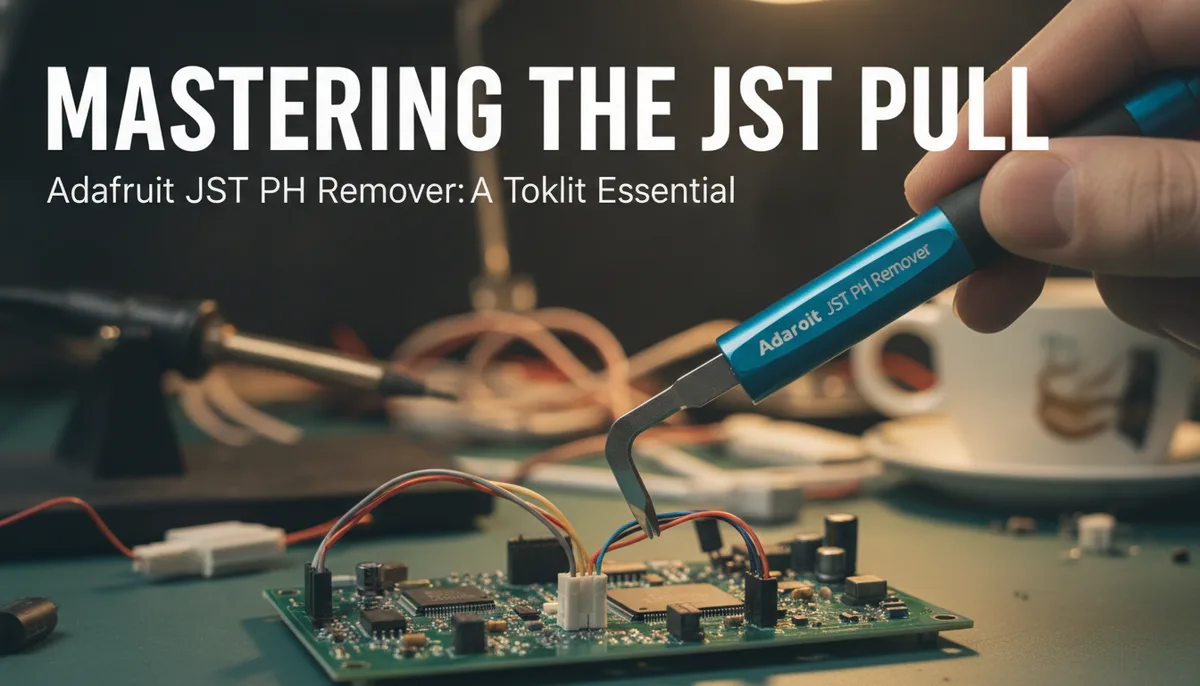
Mastering the JST Pull: Why the Adafruit JST PH Remover is a Toolkit Essential
The "Death Grip" of the JST PH Connector
If you have spent any time working with microcontrollers like the ESP32, Feather boards, or Arduinos, you are likely familiar with the JST PH series connector. It is the industry standard for small-scale Lithium Polymer (LiPo) and Lithium Ion (LiIon) battery connections. While it is praised for its compact 2.0mm pitch and its ability to stay connected under vibration, it has earned a notorious reputation among makers for its "death grip."
The JST PH connector relies on a friction-fit mechanism combined with small plastic tabs that lock into the header. This ensures that your project doesn’t lose power if it’s dropped or moved. However, that same security makes disconnecting the battery a frustrating—and sometimes painful—experience. Many makers find themselves wedging fingernails into microscopic gaps or, worse, resorting to "the yank," which can lead to catastrophic failure of the battery leads.
Recognizing this universal pain point, Adafruit has introduced the JST PH Remover / Puller, a specialized accessibility tool designed to bridge the gap between a secure connection and a safe disconnection.
Adafruit JST-PH Extractor/Puller...
The Hidden Dangers of Improper Battery Removal
It is tempting to grab the red and black wires of a LiPo battery and give them a sharp tug when the connector won't budge. However, this is one of the most common ways to ruin a battery or a project.
Wire Fatigue and Terminal Ejection
The wires in a JST PH assembly are crimped into tiny metal terminals, which are then snapped into the plastic housing. These crimps are designed to handle electrical flow, not mechanical tension. When you pull on the wires, you risk stretching the copper strands or pulling the terminal right out of the plastic. Once a terminal is loose, it can result in intermittent power failures or a complete break.
The Risk of Short Circuits
LiPo batteries are high-energy density storage devices. If you accidentally rip the wires out of the connector, the exposed positive and negative leads can easily touch. In the best-case scenario, you'll see a spark and ruin the battery. In the worst-case scenario, the battery can enter thermal runaway, leading to fire or venting. Using a dedicated tool like the Adafruit JST PH Remover keeps the mechanical force on the plastic housing where it belongs, rather than on the fragile electrical paths.
PCB Header Damage
The female header on your PCB is only held on by a few small solder pads. Excessive wiggling or prying with a screwdriver can delaminate these pads from the board. If you are working on a high-stakes project, such as an Emergency RC Repair: Soldering in the Pits, the last thing you want is to tear a battery header off the board in the middle of a race or field test.
Accessibility: Why This Tool Matters
The maker community is diverse, and not every hobbyist has the same physical dexterity. Adafruit’s release of the JST PH Remover is a significant win for accessibility in the electronics space.
For makers with larger hands, the tiny 2.0mm connector is simply too small to grip effectively. Conversely, for those with long or decorated nails, the force required to depress the locking tabs can result in broken nails or ruined manicures. Furthermore, individuals with arthritis or limited fine motor skills often find JST connectors to be a barrier to enjoying electronics.
The JST PH Remover acts as a force multiplier. By providing a wider grip and a specialized "fork" that slides behind the connector's lip, it allows the user to apply even, straight pressure. This removes the need for the "She-Hulk" strength often joked about in the community and replaces it with mechanical leverage.
LiPoly Battery 3.7V 1200mAh with JST PH
Engineering a Better Pull: How the Tool Works
The Adafruit JST PH Remover isn't just a piece of plastic; it is a thoughtfully engineered solution to a specific geometry problem.
The Fork Design
The business end of the tool features a thin, sturdy fork. This fork is designed to slide between the base of the male JST PH housing (the battery side) and the female header (the board side). Because it applies pressure across the entire width of the connector, it prevents the "cocking" or tilting that usually causes a connector to jam during removal.
Ergonomics and Material
Unlike using a pair of needle-nose pliers, which can easily crush the delicate plastic of the connector, the JST PH Remover is designed to fit the contours of the PH series perfectly. For those building out a professional-grade workbench, this tool fits right in alongside other precision instruments. If you are looking to upgrade your entire setup, check out The Soldered Anywhere Master Buying Guide for more essential tool recommendations.
Best Practices for Using the JST PH Remover
While the tool makes the process significantly easier, there is still a "right way" to handle battery disconnections.
- Inspect the Header: Ensure there isn't any hot glue or adhesive holding the connector in place. Some manufacturers use a dab of glue for extra security during shipping.
- Insert the Tool: Slide the fork of the remover into the small gap between the connector and the header. Ensure the fork is seated firmly against the plastic shoulder of the battery connector.
- Apply Even Pressure: Rather than jerking the tool, apply a steady, straight pulling force away from the board. The connector should slide out smoothly.
- Check for Wear: After removal, take a moment to inspect the plastic tabs on the connector. If they look white or stressed, the connector may be reaching the end of its mechanical life.
Precision Electronics Tool Kit
Expanding Your Toolkit for Battery Management
The JST PH Remover is a fantastic specialized tool, but it is part of a larger ecosystem of battery safety and maintenance. When working with LiPo and LiIon cells, you should also consider:
- Non-Conductive Tweezers: For positioning wires or clearing debris from a header without risking a short.
- Voltage Checkers: Always verify the health of your cells before and after a project session.
- Safe Storage: Use LiPo-safe bags or metal containers for batteries that aren't currently in use.
Integrating these habits into your workflow ensures that your hobby remains safe and your hardware remains functional. For those who enjoy pushing their gear to the limit, such as Pinecil V2 Review: Is the Hype Actually Real?, having the right support tools is what separates a successful hack from a pile of "magic smoke."
Conclusion: A Small Investment for Major Peace of Mind
In the world of electronics, it is often the smallest components that cause the most significant headaches. The JST PH connector is a marvel of miniaturization, but its physical interface has long been a source of frustration. The Adafruit JST PH Remover / Puller is a low-cost, high-impact solution that protects your hardware, your batteries, and your fingers.
Whether you are a professional developer, a student, or a hobbyist with accessibility needs, this tool is a worthy addition to your bench. It turns a stressful, high-friction task into a simple, one-second operation, allowing you to focus on what really matters: building and creating.
Related product: 3.7V 1200mAh Lipo Rechargeable B...
Related product: 115 In 1 Magnetic Precision Repa...
Related product: Adafruit JST-PH Extractor/Puller...
Related product: 3.7V 1200mAh Lipo Rechargeable B...
Related product: 115 In 1 Magnetic Precision Repa...