
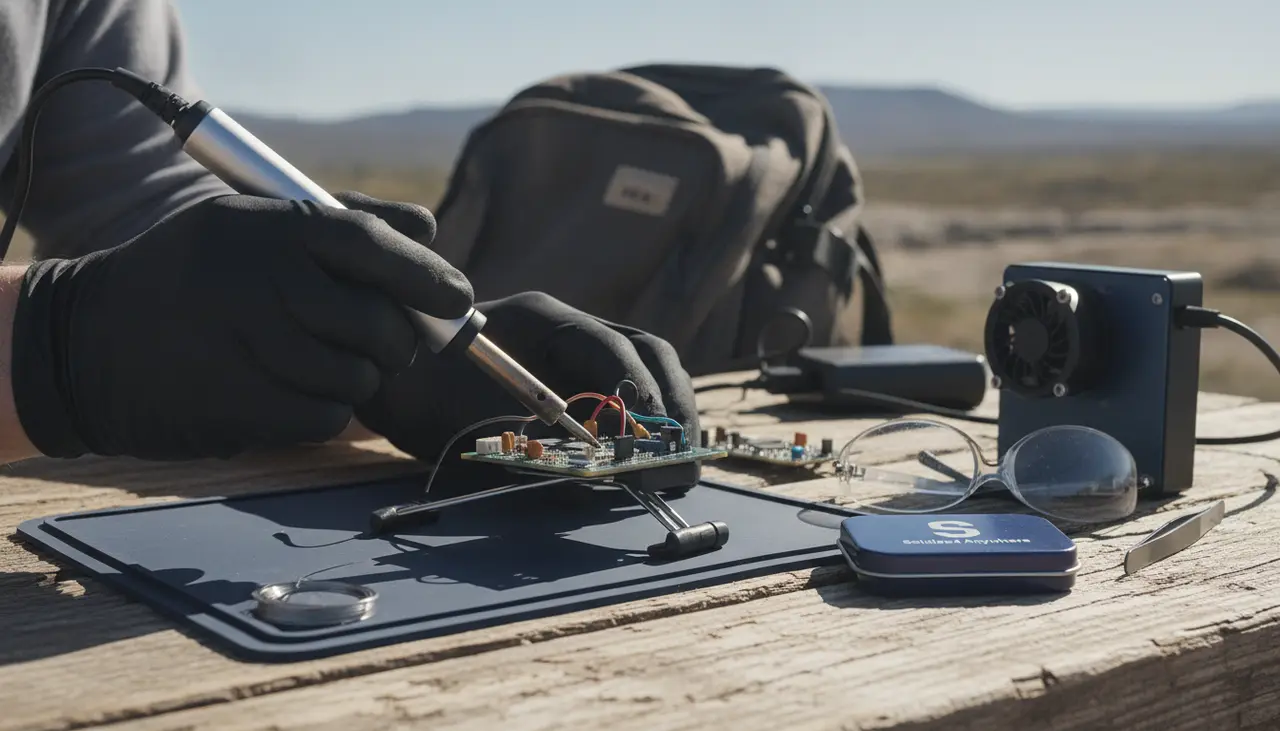
Soldering Safety in the Field: 5 Things You Need to Know
Whether you are hunched over a drone at a windy race track or fixing a sensor in a cramped server room, soldering in the field is a completely different beast than working at a dedicated workbench. When you're away from your controlled environment, "safety" isn't just a buzzword—it’s the difference between a successful quick fix and a melted car seat or a painful burn.
Soldering iron safety in the field requires a proactive approach to heat management, stable power delivery, and personal protection. Because you lack the fixed safety equipment of a lab, you must rely on portable solutions like heat-resistant silicone mats, proper USB-C PD power sources, and compact eye protection to mitigate risks.
This guide is for the RC enthusiasts, field technicians, and makers who take their tools into the wild. We know your schedule is busy and your workspace is often "whatever flat surface is available." Let’s make sure your mobile kit is as safe as it is effective.
Field Safety vs. Bench Safety: What’s the Difference?
When you’re at home, you have a heavy stand and a fume extractor. In the field, you might be balancing a Pinecil V2 on a rock or a dashboard.
| Feature | Bench Safety | Field Safety Priority |
|---|---|---|
| Work Surface | Dedicated ESD-safe bench | Portable Heat-Resistant Silicone Mat |
| Iron Stability | Heavy weighted stand | Integrated stands or heat-resistant caps |
| Fume Control | Active carbon filtration | Natural ventilation or portable fans |
| Power Source | Grounded AC Outlet | USB-C PD Power Bank or LiPo Battery |
| Lighting | Overhead LED panels | Headlamps or integrated iron LEDs |
1. Master Your Heat Zone
In a workshop, you know exactly where the "hot zone" is. In the field, the hot zone is often dangerously close to flammable materials or expensive components.
One of the best investments for a mobile kit is a small, foldable silicone soldering mat. It provides a designated "safe space" for your iron and protects the surface you're working on—whether that’s a plastic folding table or your own lap (though we strongly recommend against the latter!).
Pro-Tip: If you’re using a high-performance iron from our Best Portable Soldering Irons of 2024: A Field Guide, remember that these tools heat up in seconds. Always have your resting spot ready before you plug in the power.
2. Secure Your Power Path
Tripping over a cord at home is annoying; tripping over a cord in the field can pull a 400°C iron onto your lap or break a delicate PCB.
- Use High-Quality USB-C Cables: Ensure your cable is rated for the wattage your iron demands (usually 65W or higher). A cable that overshoots its thermal limits can become a fire hazard itself.
- Battery Placement: If you are powering your iron via a 6S LiPo battery or a large power bank, ensure the battery is stable. A rolling power bank can yank your iron right off the work surface.
3. Don't Skip Eye Protection
It’s tempting to think, "It’s just one quick joint," and skip the glasses. But field conditions are unpredictable. A gust of wind can blow smoke into your eyes, causing you to flinch while holding a hot iron, or a tensioned wire can flick molten solder toward your face when it’s desoldered.
Keep a pair of slim, wrap-around safety glasses in your travel kit. Modern "over-spec" styles are lightweight and barely take up any room in a tool roll.
4. Manage Fumes in Tight Spaces
While "Soldered Anywhere" often implies the great outdoors, sometimes "anywhere" is the back of a van or a cramped utility closet.
Solder fumes contain rosin flux, which can irritate the lungs and eyes. If you aren't in a well-ventilated area:
- Position yourself so the natural breeze blows the smoke away from your face.
- For indoor field work, a small 5V USB fan can act as a rudimentary fume diverter, pushing the smoke away from your breathing zone.
5. The "Cool Down" Protocol
The most common field injury happens after the soldering is done. In a rush to pack up and move to the next task, it’s easy to accidentally grab a hot tip or melt your tool bag.
- The Silicone Cap Trick: Many modern portable irons support heat-resistant caps. These allow you to cover the tip immediately after unplugging, so you can safely stow the tool without waiting ten minutes for it to air cool.
- Tin Your Tip: Before turning the iron off, apply a fresh layer of solder to the tip. This prevents oxidation while the iron is stored in your bag, ensuring it's ready for your next "emergency" repair.
Common Beginner Mistakes in the Field
- The "Quick Touch" Test: Never check if a portable iron is on by moving your hand near the tip. These irons are small and don't radiate much "ambient" heat until you're right on them. Trust the OLED display.
- Unstable Resting: Using a coffee mug or a notched piece of wood as a temporary stand. These are prone to tipping.
- Neglecting the Ground: If you're working on sensitive electronics, remember that many portable irons have a screw for a grounding wire. Using it can prevent ESD (Electrostatic Discharge) from killing your project.
Best Safety Gear for Mobile Makers
- Best for Portability: Small 11" x 8" Silicone Heat Mats. They roll up into the size of a burrito.
- Best for Eye Safety: Clear-lens ballistic rated glasses (ANSI Z87.1).
- Best for Storage: Screw-on aluminum or high-temp silicone sleeves.
FAQ: Staying Safe on the Go
Is it safe to solder inside a vehicle? Yes, but with extreme caution. Ensure you have a window cracked for ventilation and use a weighted silicone mat on a flat surface like a center console. Avoid soldering near upholstery or air-bag deployment zones.
Can I use any USB-C cable for my portable iron? No. You should use a cable specifically rated for Power Delivery (PD) at the wattage your iron requires. Low-quality phone charging cables can melt under the sustained current draw of a soldering iron. For more on choosing the right setup, see The Soldered Anywhere Master Buying Guide.
What should I do if I burn myself in the field? Immediately run cool (not ice-cold) water over the burn for at least 10 minutes. If you’re truly "anywhere," use a clean water bottle from your pack. Cover it with a sterile dressing and seek medical attention if the burn blisters or covers a large area.
Affiliate Disclosure: This post contains affiliate links to safety gear like heat-resistant mats and safety glasses. If you purchase through these links, we may earn a small commission at no extra cost to you, which helps us keep the lights on here at Soldered Anywhere.